
Talents in Plotweaver
By Max Brooke
Talents play an important role in Plotweaver, but before we get to that, we need to discuss some fundamentals about the game. Come with me on this journey from core systems up through the talents that make characters feel like heroes at the table!
Flows of Play
First, let’s talk about the flow of play in Plotweaver. All games have a flow of play, the pattern by which control shifts between participants and systems. Systems can be mechanistic and explicit (the rules of an RPG, printed in a hefty tome) or derived from convention (a communally understood etiquette of playing pretend).
In many roleplaying games, there is a flow of focus between freeform narration (the story created by the GM and players) and mechanics (the rules to adjudicate and guide outcomes within that story). It should be noted that some RPGs concretely call for a more fixed flow of play, while others tend to let their flow of play emerge from their rules at the table. Of course, a particular game’s flow of play isn’t a fixed, objective constant, as it is determined in large part by the participants themselves. However, trends do tend to emerge for specific games.
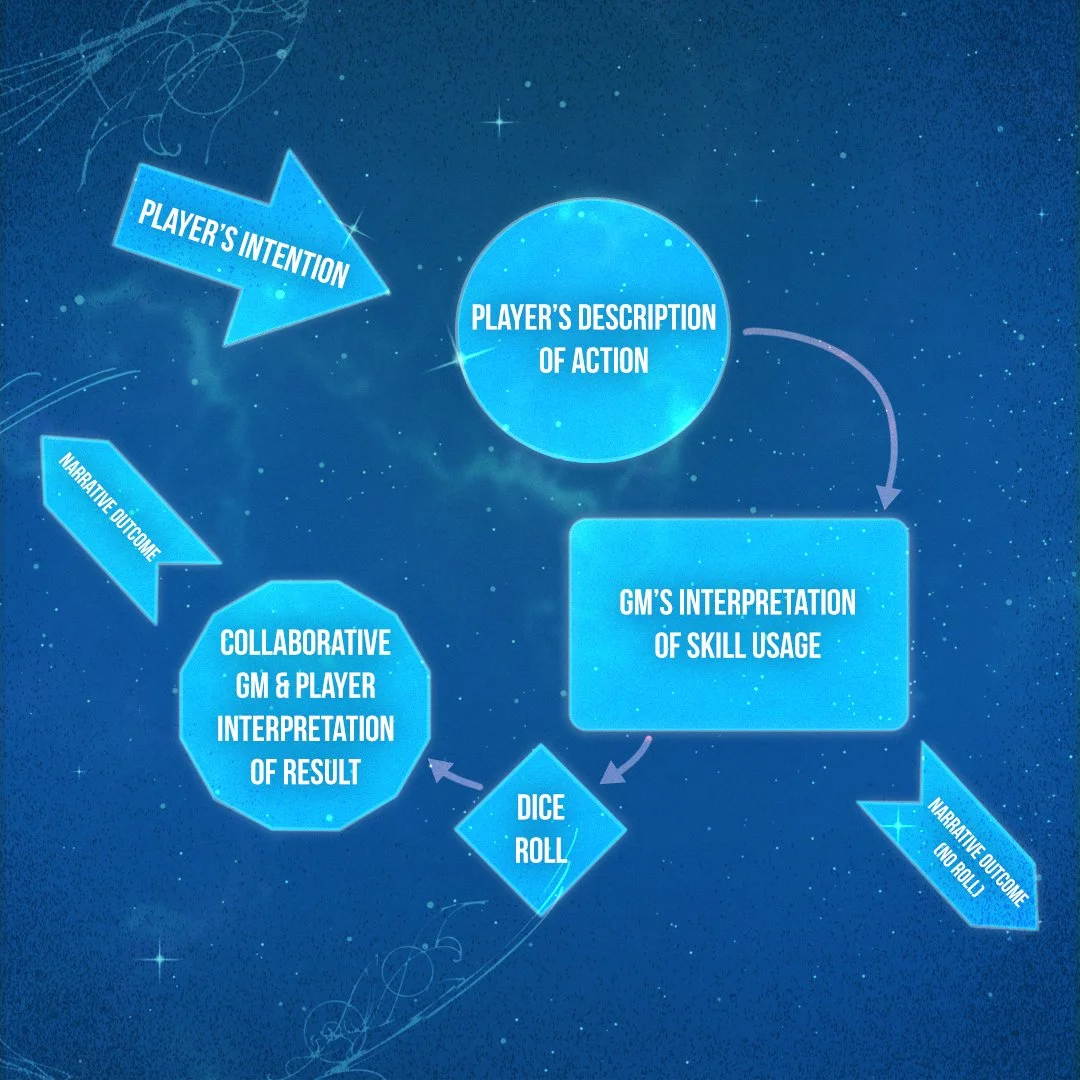
In Plotweaver, the typical flow leans more toward the implicit side of the spectrum, with a core mechanic that codifies a path of information between the players and GM but encourages a healthy margin of “wiggle room” to reduce friction between narrative and systems. This is a fairly familiar structure for many roleplaying games in the fantasy and sci-fi genres. Mapped out, it tends to look something like this at the table.
Core Mechanic and Skills
The core mechanic in Plotweaver emerges from its history, and the design of the Cosmere RPG that came before it. The Cosmere RPG must handle characters who can fly, shoot blasts of destructive energy, or move objects with a thought, but it also must place them alongside people without such abilities, without diminishing the latter’s importance in the story. Plotweaver carries this concept forward into new stories, genres, and worlds.
In Plotweaver, the skill system plays an extremely important role in mediating the relationship between characters with supernatural powers and those without. And that is because, in principle, most results within the story can be accomplished with the mundane suite of skills. The paths to reach those results might look different, but the outcomes are consistent.
For example, if a character wishes to reach a higher vantage point in a city, they might test Athletics to leap to a low-hanging fire escape, or Deception to smooth-talk their way into an exclusive nightclub with a balcony, or any number of other paths up. The GM might disallow the test in some circumstances or waive having to attempt it to succeed in others, but most of the time, players can think of some way to plausibly make the effort.
A character who possesses the ability to fly unassisted can do this immediately and often without a test, typically by spending Essence. The story differs, but the final result of “being higher up” is much the same, regardless of the path the character took to get there. Because they can bypass the chance of success or failure inherent in the test, playing the character who can fly feels special and cool. But it doesn’t actually change the array of possible results as much as it might seem at first glance. There are, of course, some abilities that are hard to replicate with skill tests, especially in particularly potent Adept paths, but even then, there are often means a clever character can use to achieve a similar end result.
What Does Any of This Have to Do with Talents?
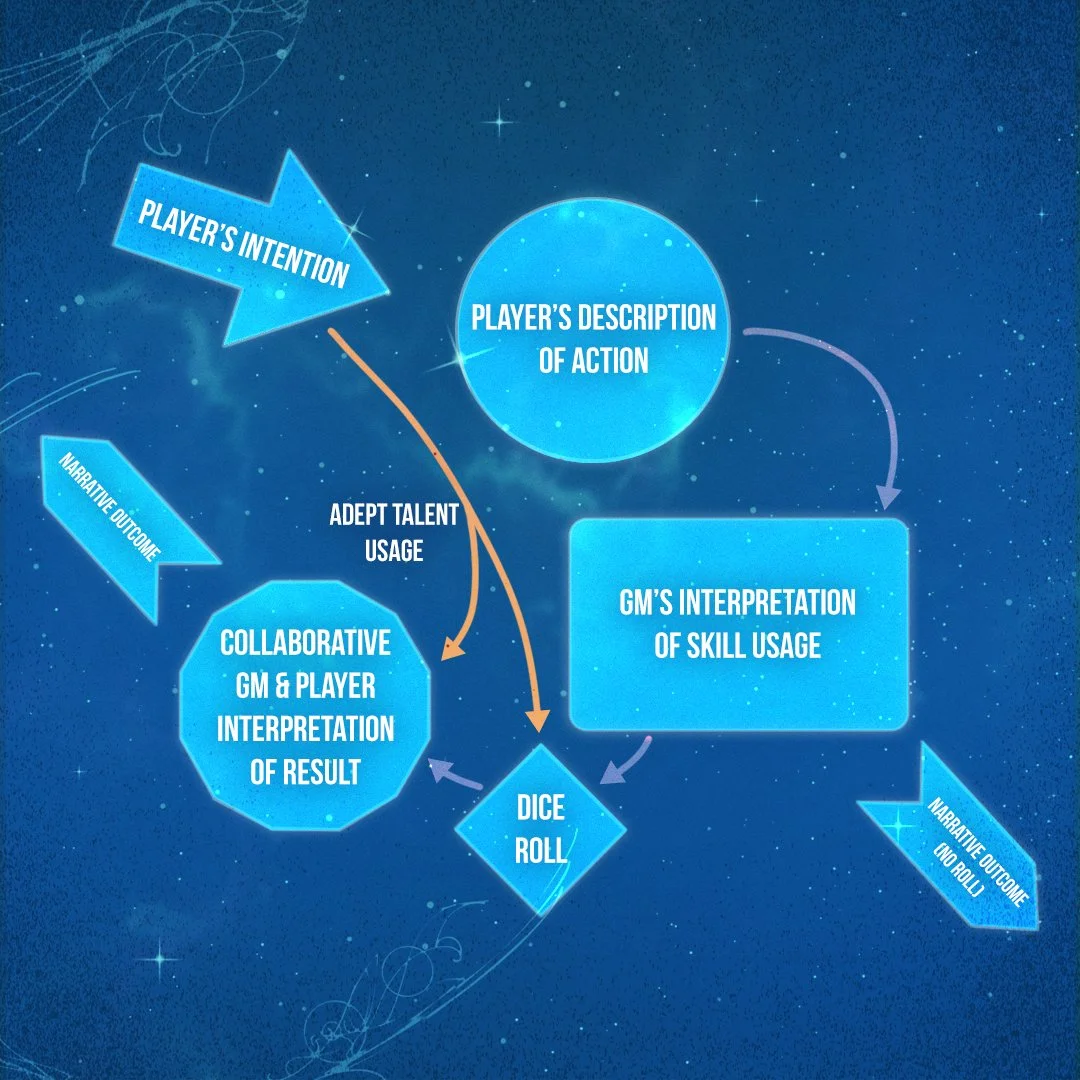
As in the example of flight, talents are the main mechanical means by which players circumvent the typical flow of play. By shortcutting usually necessary steps and getting right to the outcome they want, players feel empowered.
For Adept paths, shortcutting a test often means spending Essence to take some course of action that is physically impossible for the average person in the setting. These are often flashy displays of power that help the player to experience the fantasy of their character, and also serve as fairly open-ended problem-solving tools. Not needing to test skips an important, noticeable step of the usual process.
Heroic path talents tend to defy the conventions of physics less blatantly, and in fact, many Heroic path talents seem almost mechanistic. Heroic paths have most of the “bread and butter” talents that just make a character better in some straightforward way: Hardy increases health, Mighty increases damage, Surefooted increase movement distance and mitigates fall damage, and so forth. Many early talents in Heroic trees are actions that grant a simple option specific to their character in structured scenes like combat, conversations, and endeavors. For example, the envoy’s Steadfast Challenge can rattle an adversary in any scene type.
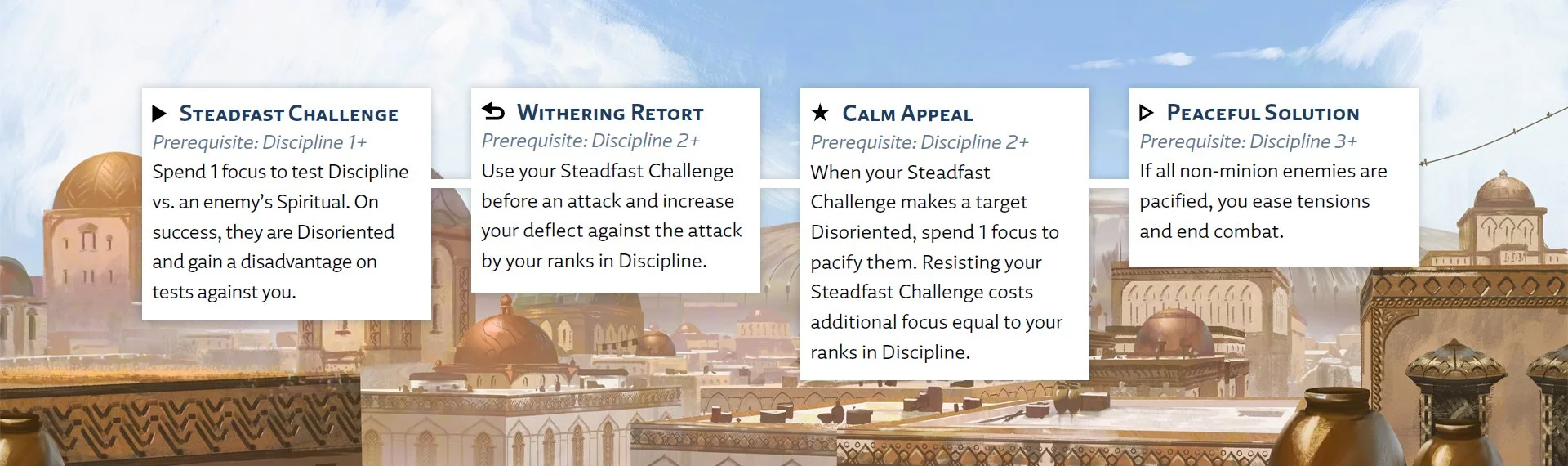
However, sprinkled in among these talents are a carefully curated selection of options that circumvent the flow of play even more thoroughly than flight. By using these talents, players are able to skip over one or more steps in the usual pattern. For example, the envoy’s Peaceful Solution can end a fight more quickly than most combat talents! Heroic talents that alter the flow of play in this way tend to be more specific in their results than their Adept equivalents, but less specific in the means by which these results are accomplished. This is important because it gives players the certainty that they can accomplish the end that they want. The narrative details are left vague enough that the player and GM can work out how the ability actually lets the character reach their end.
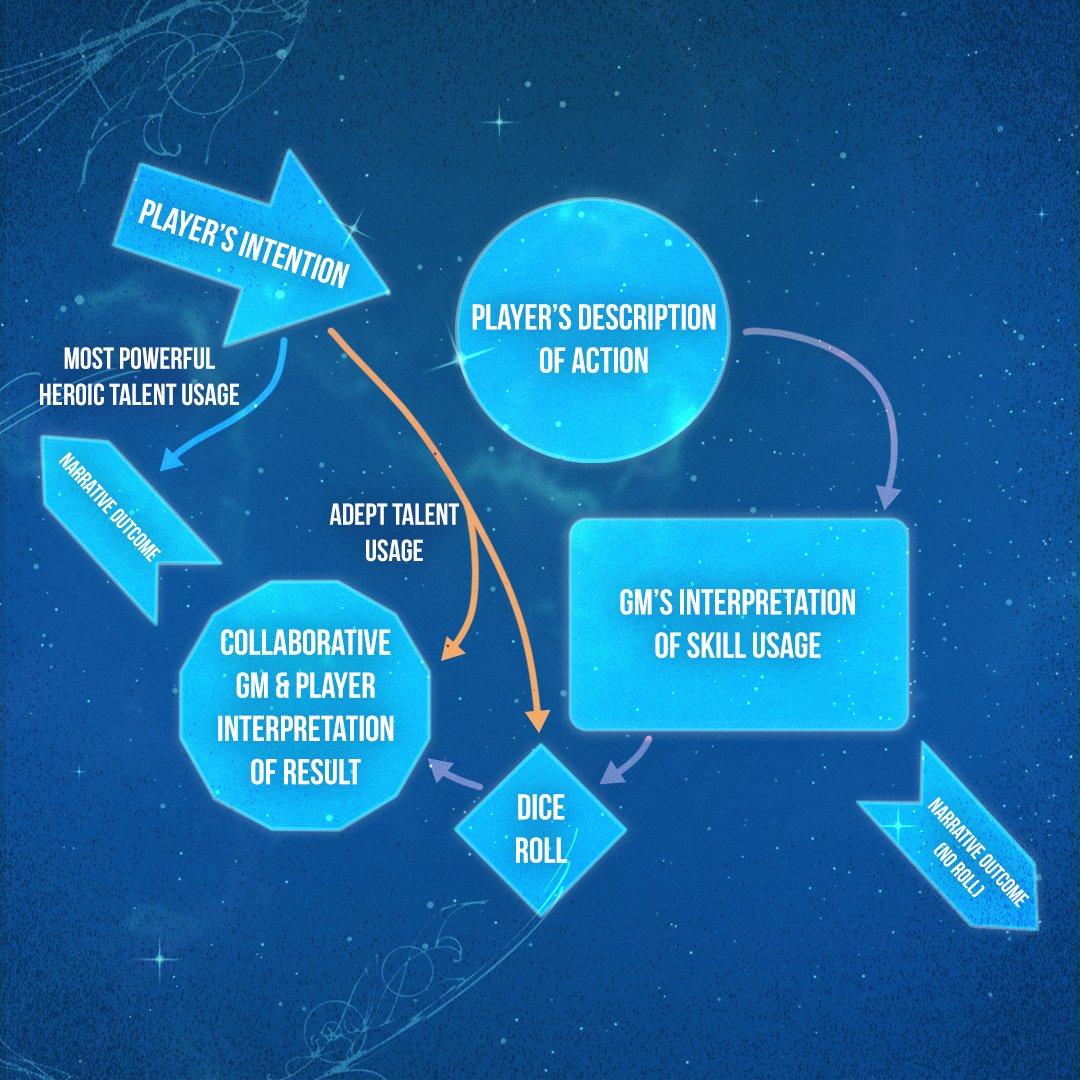
And that’s why talents are so important to Plotweaver: talents are the primary means by which the typical pattern of play is disrupted, and those disruptions make the character feel really cool. The core mechanic and skills establish the baseline of what is achievable, and so talents are one of the ways your specific character fantasy comes alive at the table!